By the RAAD team
Reusable asset tracking with a pool of portable trackers
Listen to this article
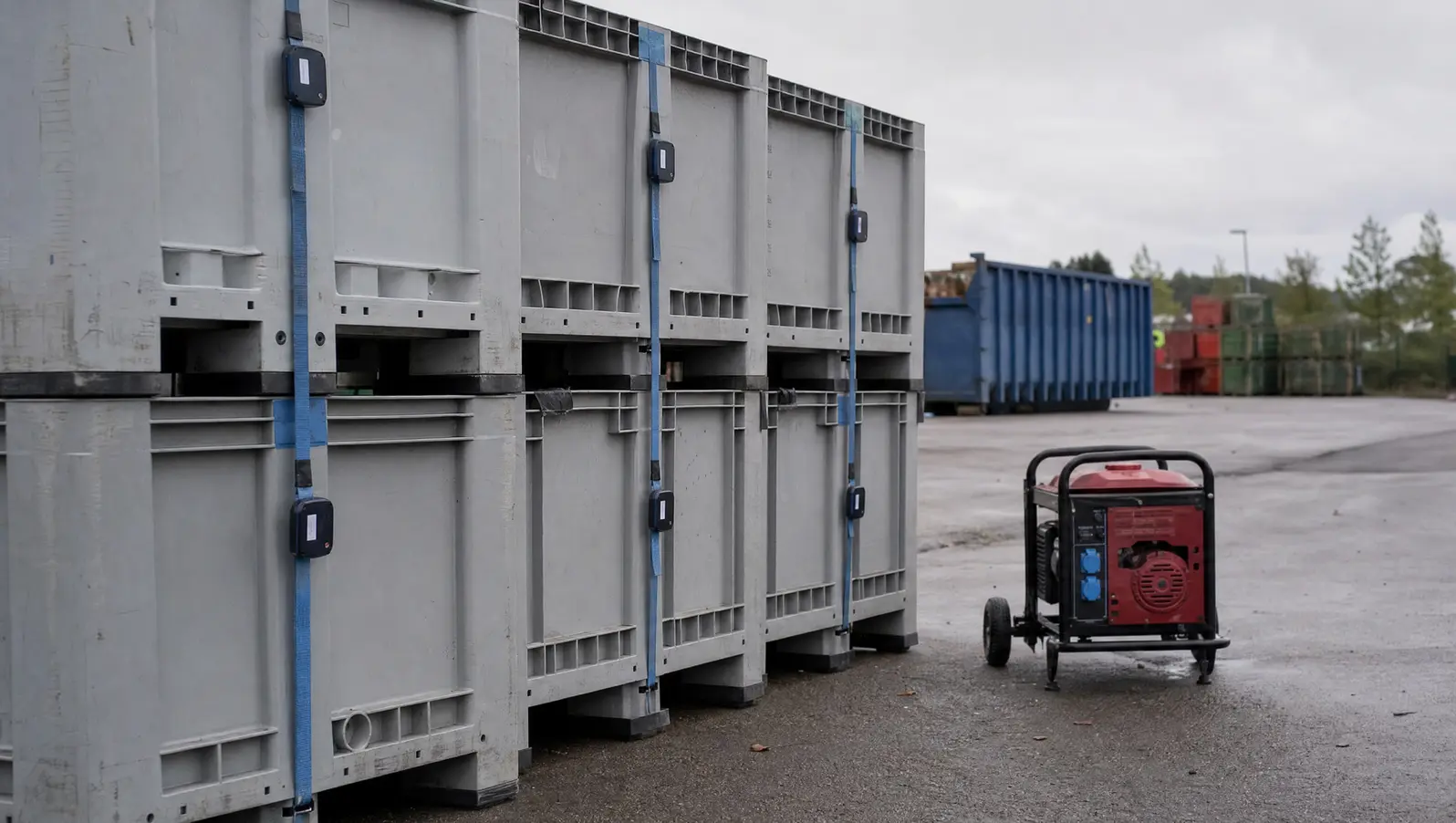
Most tracking conversations start with vehicles, but a large share of an operation's assets are not vehicles at all. They are generators, tool kits, returnable containers and one-off shipments: no ignition to wire into, and no need for location data around the clock. Reusable asset tracking covers them without buying a permanent tracker for every single one.
Why a wired tracker is the wrong tool for many assets
A permanently installed tracker earns its keep on a vehicle that runs every day. On an asset with no power source of its own, or one that only needs watching for part of its life, the device mostly sits idle. A generator out on rental, a tool kit moving between construction sites, a container circulating between a depot and customer facilities, a high-value shipment that needs extra attention until delivery: in each case, a fixed device per asset spends money where a shared device would do the same job.
What reusable asset tracking is
A portable, battery-powered tracker is assigned to an asset for exactly as long as visibility is needed. When the rental ends, the shipment lands or the project closes, the device comes back, gets recharged and checked, and goes out on the next job. One tracker serves many assets over its working life.
The pool rarely has to match your asset count. Say a rental operation owns 200 machines but seldom has more than 40 away from base at once. Around 40 trackers, plus a few spares, cover everything in circulation. Size the pool to how assets move rather than to how many you own.
Set reporting to the job
Battery-powered devices trade update frequency against operating time. Frequent position reports drain a battery in days. Longer intervals, down to one check-in a day, can stretch the same device to weeks or months. The right setting depends on the assignment: close monitoring for a short shipment in transit, a slower heartbeat for equipment that will sit on a customer site for weeks.
When a tracker returns, the routine is the same as for any rental kit. Charge a batch at once, give each device a quick check, and mark it ready. The asset record in RAAD carries the assignment, so you always know which tracker is on which asset and for which job. Scheduled reports give the customer a clean record of where their equipment travelled while it was out.
Geofences turn dots into events
Raw coordinates are hard to act on. Geofences in the Track module change that. Mark out the depot, the customer's site, the project boundary or the route, and movement turns into arrivals, departures and visits to named places instead of a stream of points on a map.
For a generator on rental, the events worth noticing are arrival at the customer site, movement outside the agreed area, an unexpected departure and eventually the return. Change the assignment and the geography changes with it. A container operation may watch a distribution centre and a set of customer sites. A one-off shipment watches the origin, the destination and the road between them. Each time, the same tracker goes out with a monitoring setup that fits the new job.
Context decides whether an event deserves a phone call
A generator leaving a customer site at two in the afternoon probably means the rental is over. The same exit at two in the morning deserves a closer look. Time of day, day of week and which zone the movement happened in all change what an event means.
Rules in RAAD can carry those conditions, so routine movements do not create noise. AI Insights then reads every alert that fires, holds back what does not need a person, and brings the rest with a reason and a proposed fix. Nothing is acted on until someone approves it. The after-hours departure reaches a dispatcher with an explanation attached, while the afternoon departure simply closes the job.
Where the asset must stay closed until it reaches the customer, Guard e-locks show lock state alongside position in the same console, so an unexpected opening is an event in its own right rather than something discovered after the fact.
Share visibility without handing over the keys
The customer holding the equipment often wants to see where it is. That does not mean handing them a window into your whole operation. Every account in RAAD is walled off and access is controlled per screen, so you can scope a customer's view to the equipment in their custody, for exactly as long as the assignment runs. When the job ends, the tracker moves on and so does the view.
Let the history show how assets circulate
After a few months of assignments, trip and stop history starts answering questions you did not plan to ask. Which customer sites hold equipment longest? Where do empty containers accumulate? Which locations run consistently long return cycles? Entry and exit times around named zones give dwell per site, and a scheduled report can land that comparison in your inbox every week without anyone asking for it.
Rental operators use this to spot customers who routinely keep equipment past the agreed date. Container operators look for sites where returns stall. Project teams check whether tools are actually moving between sites or parked in one corner of a yard. The questions change with the operation. The data is already being collected as part of running the service.
Keep the paperwork moving with the assets
Equipment in circulation needs checks between assignments, and the certificates that go with it expire on their own schedule. Maintenance records in RAAD carry inspection reminders, and Documents flags expiring paperwork before it becomes a problem, so a generator does not go out on rental with an out-of-date inspection.
A natural service for resellers
For partners who resell RAAD, a tracker pool turns hardware into a service. Rather than selling a customer a device for every asset once, the partner sells visibility as a subscription: a monthly fee per active tracker, billed under the partner's own brand, logo, domain and invoices. The customer covers exactly the assets in circulation, and a one-off hardware sale becomes monthly recurring revenue.
If you already have a cupboard of portable trackers from an earlier system, they are not obsolete. RAAD takes over the hardware you already run rather than replacing it, so the pool you own joins the same console as your vehicles: one map for the whole estate, whether an asset has an engine or just a handle.
Before you start
- Check what your trackers actually report. Position, motion, battery level and event types vary by model, so confirm the data a workflow depends on before you promise it to a customer.
- Match the reporting interval to the job, and tell the customer what update rate to expect.
- Keep the pool slightly larger than peak circulation, so charging never delays a rental going out.
- Decide in advance who sees what: the operator, the end customer, and any partner in between.
Quick answers
What is reusable asset tracking?
Tracking with a shared pool of portable devices. A tracker accompanies an asset for the rental, shipment or project that needs it, then returns for charging and its next assignment.
Which assets suit it best?
Assets without a permanent power source that only need visibility for part of their life: rental and construction equipment, tool kits, returnable containers, and temporary or high-value cargo.
How many trackers does it take?
Fewer than you own assets, in most operations. Size the pool to the number typically away from base at once, plus a margin for peaks and charging.
If you are planning reusable tracking for your own assets, or you resell tracking and want a white-label service built around a tracker pool, talk to us about bringing your devices onto RAAD.
One platform for every connected asset
Tracking, power, cameras, metering and compliance in one console — resold under your own brand and billed by you.
Explore the RAAD platform